
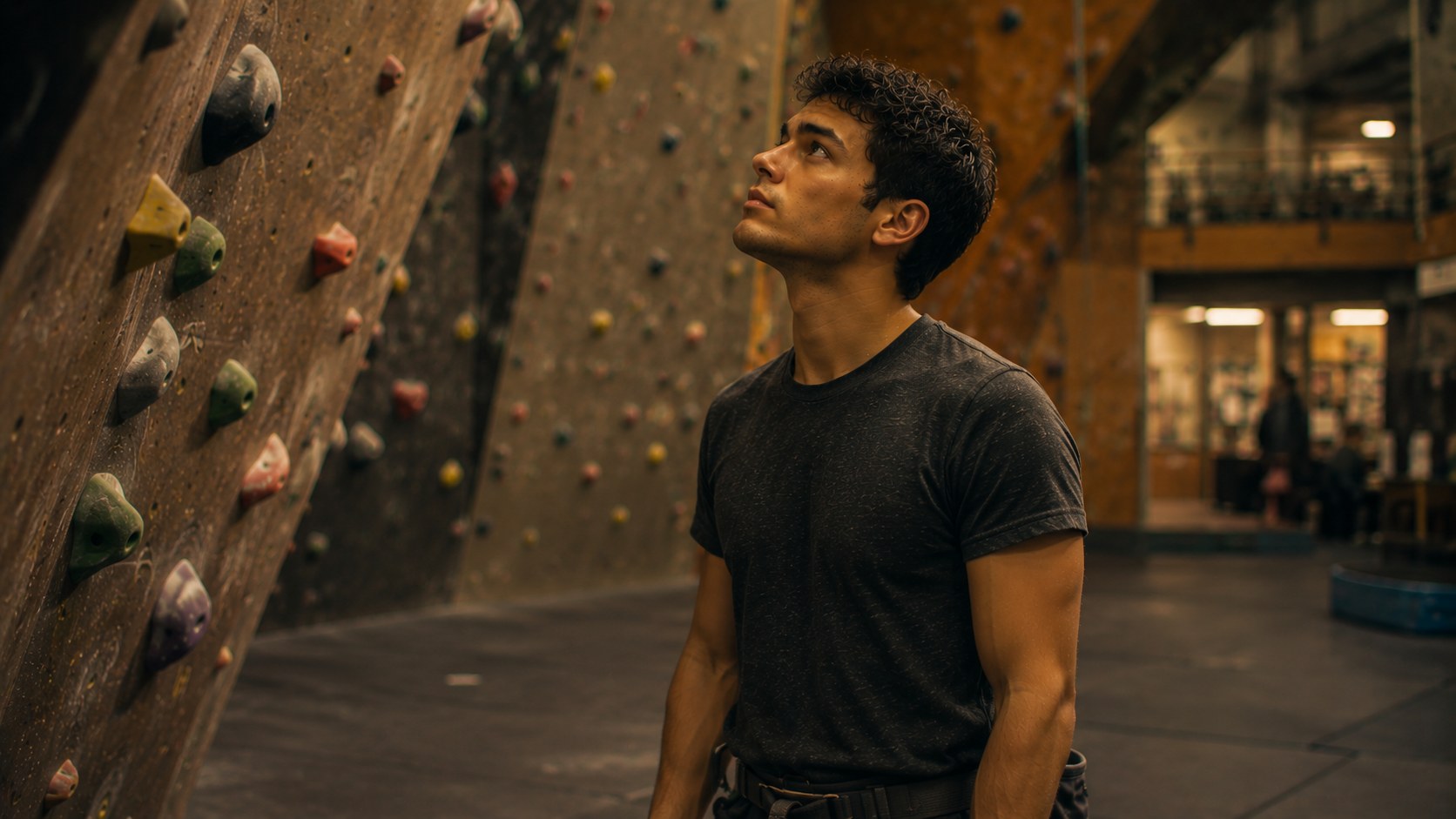
You notice it before he says anything. Something comes up, a tryout, a hard conversation, a situation that asks something of him, and he finds a way around it. Not dramatically. Not with an obvious excuse. Just a quiet redirect. "I don't really care about that." "It's not a big deal." "I'll do it later."
He doesn't look scared. He looks unbothered. And that's the part that can fool you.
Teen boys are often very good at disguising fear as indifference. The "I don't care" is doing a lot of work. So is the sudden schedule conflict, the topic change, the casual dismissal of something he was obviously hoping for three weeks ago. The emotional footprint of fear in a teen boy doesn't usually look like trembling. It looks like avoidance, and avoidance is easy to mistake for a lack of motivation, or a personality thing, or just being a teenager.
What Fear Actually Looks Like in Teen Boys
Fear in teen boys tends to surface as a specific cluster of behaviors: backing away from things that require vulnerability, quitting early on things where failure is visible, and presenting a studied indifference toward anything that might expose them if it doesn't go well.
This isn't calculated dishonesty. It's protection. A teen boy who has connected his self-worth to performance, which most of them have, in one form or another, has a lot at stake every time he tries something. If he tries out and doesn't make it, that's not just disappointment. It's information, or at least it feels like it. So not trying, or not caring, removes the risk. You can't fail at something you never actually committed to.
The thing parents sometimes underestimate is how much is running underneath "I don't care." That phrase, used in the context of something he used to want, is often a signal. It doesn't mean he's lost interest. It often means the gap between wanting something and the fear of not getting it has become too wide to hold comfortably, and pulling back feels safer than trying.
Why Teen Boys Believe Fear Disqualifies Them
There's a specific lie that runs quietly through a lot of teen boys: that still feeling scared means something is wrong with them spiritually or personally. That the kids who are confident and capable don't experience the same wobble in their chest before something hard. That fear is evidence of weakness, not just evidence that something matters.
This belief keeps a lot of boys stuck in ways that are hard to track from the outside. He's not avoiding because he doesn't have the capacity. He's avoiding because he's decided his fear disqualifies him from trying, and trying from a place of obvious vulnerability is about the most dangerous thing a teenage boy can imagine.
It's worth knowing this because it changes the conversation. Telling him to "just do it" or "stop overthinking" doesn't address what's actually happening. It confirms that the fear is a problem to be overcome, which is exactly what he already believes. What he needs is a different frame, one where fear is normal, expected even, and where moving forward while afraid is the actual definition of courage, not the absence of it.
I learned this the hard way, in one of the strangest moments of my life. I was 18, just out of high school. My brother's girlfriend's cousin had died, and she asked if I would say a prayer. How do you say no to that? So I said yes. And that prayer turned into being asked to do the whole funeral. At 18. No training, no experience, nothing. If she had walked up to me and asked "will you do a funeral?" I would have said absolutely not. But she asked one small question first. Are you willing to say a prayer?
What I took from that experience, and it's stayed with me, is that God rarely asks us to hit a home run. He asks if we're willing to step up to bat. And then if we're willing to swing. He's the first base coach and the third base coach, telling us to go or hold, one step at a time. He doesn't show us the whole play. He just asks if we're willing to take the next one.
How Parents Can See Past the Indifference
The most useful move a parent can make is to name the fear without making it shameful.
Not "you're being afraid", which lands as an accusation, but something quieter: "that kind of thing would be hard for a lot of people." Or asking about the specific scary part: "what's the part that feels risky about this?" These aren't magic phrases. But they open a slightly different door than the usual encouragement, because they start from the place where he actually is rather than from the place he's pretending to be.
Parents can also let him see their own history with fear, the times they did something while uncertain, the times they backed down and wished they hadn't, the ways moving through something scary changed them. This matters because one of the things teen boys are quietly watching for is whether the adults around them have any proof that courage works in real life, not just in motivational speech. A parent who can say "I was terrified before that, and I did it anyway" gives him a more useful picture than any amount of encouragement.
If this connects to something you've been watching in your son, Real Talk was written for exactly this. Chapter 10 speaks directly to the fear that keeps teen boys stuck, what it tells them, why it lies, and what it looks like to move forward anyway with faith. It's a resource you can read first, or work through with your son. You can find it at ivoryroad.shop.
Frequently Asked Questions
How do I help my teenage son face his fears?
Start by naming the fear without making it shameful. Not "you're scared" as an accusation, but something quieter like "that kind of thing would be hard for a lot of people." Giving him room to acknowledge it without it being a crisis is often the first step toward moving through it.
Why does my teen son avoid things he used to want to do?
What looks like indifference is often protection. A teen boy who has connected his self-worth to performance has a lot at stake every time he tries something. Not caring, or not trying, removes the risk of visible failure. The "I don't care" is often doing a lot of work.
Is fear and avoidance normal in teenage boys?
Yes. Fear in adolescence is particularly intense because everything feels high-stakes and identity is still forming. Avoidance is a common coping strategy. The goal isn't to eliminate the fear but to help him develop the capacity to move forward while it's still there.
What does courage look like for a teenage boy?
Not the absence of fear. Courage for a teen boy looks like doing something that matters to him even when he's uncertain about the outcome. It's trying out even though he might not make it. It's saying something honest even though it might not land. Small, private moves toward what's real, not dramatic gestures.
This post was written by Dr. Scott Fuller. Real Talk is a faith-based book series for teen boys, built around the real things boys carry: identity, emotions, and everyday faith. Learn more at ivoryroad.shop.
Related reading
What Makes a Man? What Your Teen Son Is Already Believing